Feary J., et al, Assessment of cancer biomarkers in the Grenfell firefighter cohort study, Scientific Reports from Nature Press, May 2025
Why was the study undertaken?
Previous studies suggest that firefighters have an increased risk of developing some cancers, due to exposure to smoke, dust and other occupational hazards. Firefighters who respond to major fires and incidents may face additional risk.
We sought to investigate further, carrying out a pilot study including 261 firefighters who were part of the Grenfell Firefighter Study.
What did you look for?
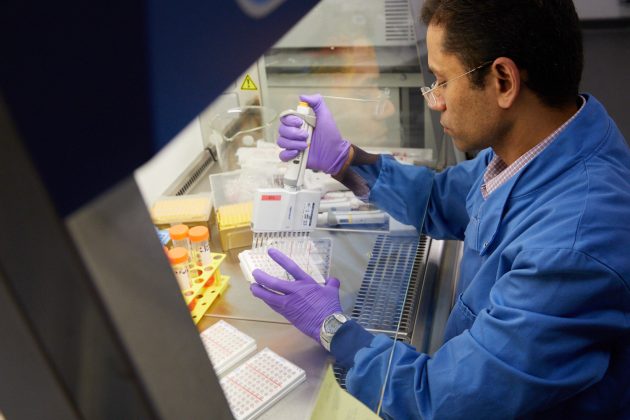
We used a technique which involves looking for variants in circulating free DNA (cfDNA) in blood samples. These are tiny fragments of genomic DNA of particular size that are released into the bodily fluids – either through natural processes (like the cell turnover ) or as a result of tissue damage or disease. We also looked at the genetic sequence of any cfDNAs we found to find mutations that could be linked to cancer.
Crucially, our study also includes data from the London Fire Brigade on individual exposure to fire smoke at Grenfell and at previous and subsequent fires, allowing us to look for links between which fires people attended and any cfDNA mutations.
What did you find?
Analysing blood samples from 261 Grenfell firefighters, we found a small number of mutations in cfDNAs that have previously been linked with cancer (11 mutations in total, one per person in 11 people). These mutations were all in firefighters who attended the Grenfell Tower fire either in the first 23 hours (the fire phase) or in the subsequent 13 days (the recovery phase).
Because of the small numbers of people in this study and the small number of DNA mutations found we concluded there was no evidence of an association between fire smoke exposure – either from historical exposure or the Grenfell Tower fire – and the presence of these mutations.
Was this a significant finding?
There is no conclusive evidence from our interim pilot study that there is an increase in cancer risk for the firefighters whose bloods we tested.
Firstly, 11 mutations is a small number and while these changes have been associated with some cancers, it does not mean that an individual has, or will develop, cancer just because they have a mutation.
Secondly, we do not know how common these cfDNA changes are in the general population, and were only able to take blood samples from a very small number of firefighters who did not attend the Grenfell fire. It’s possible these mutations might be found at similar levels in the general population or other firefighters.
For this reason, we can’t say from our study if there is a specific increase in risk of cancer for firefighters who attended Grenfell.
Do the study findings apply to other groups of people, including Grenfell residents?
The results should not be extrapolated to other populations. This is because firefighters will have been exposed to fire smoke on multiple occasions over their career. They may also be at increased risk of cancer due to other factors.
What’s next for this research?
Having established that we can detect some cfDNAs mutations of interest in this pilot study, we will repeat the method in the entire study population of 685 firefighters in the Grenfell Firefighter Study. We also plan on using a larger panel of genes to look at other DNA mutations associated with cancers. In the longer term, it would also be helpful to understand how common these mutations are in the general population.