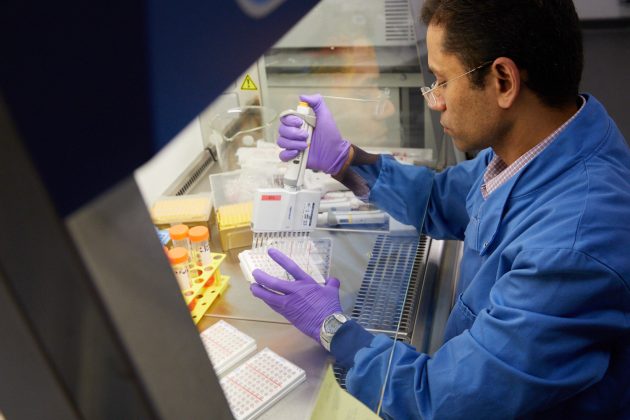
Researchers in Cambridge have developed a customised blood test that can predict, more accurately than standard scans, whether treatment has successfully eradicated diffuse large B-cell lymphoma (DLBCL).
DLBCL is the most common form of aggressive non-Hodgkin lymphoma. It is typically treated with a combination of chemotherapy and the antibody treatment rituximab, given over several cycles. While many patients are cured, around 30–40% will have disease that does not respond fully or returns after treatment.
A major challenge is distinguishing, at the end of treatment, those patients who are truly cured from those who still have tiny amounts of lymphoma left behind and are at risk of relapse. Doctors usually rely on PET-CT scans to assess response to treatment. However residual lymphoma is often present at such low levels that it cannot be detected by these scans. In addition, some scans can also be difficult to interpret because inflammation or healing tissue can mimic the appearance of active lymphoma. This uncertainty often leads to anxious ‘watch and wait’, repeat imaging, and sometimes invasive biopsies to confirm whether lymphoma is still present.
Researchers led by Dr Dan Hodson and Dr Joanna Krupka at the Cambridge Stem Cell Institute developed a special blood test or ‘liquid biopsy’ that looks for evidence of residual lymphoma. The test detects circulating tumour DNA (ctDNA) – small fragments of DNA shed by lymphoma cells into the bloodstream. If ctDNA is still detectable at the end of treatment, it can indicate residual lymphoma.